
Looking for an electrician in Conway, FL who knows the houses around the lakes? At 24 Local Electrician, we handle residential and commercial electrical work across Conway, Belle Isle, Pine Castle and Edgewood panels, wiring, outlets, lighting, dock and boathouse circuits, and 24-hour emergency repairs.
Conway has a particular mix: mid-century homes on established streets, a lot of lakefront property along the Lake Conway chain, and the kind of afternoon storms Central Florida is known for. Each of those brings its own electrical problems. We deal with all three regularly.
Finding a local electrician in Conway shouldn’t be complicated. We handle the whole range in one place troubleshooting, repairs, panel replacement, rewiring, fixture and fan installation, outdoor and landscape lighting, surge protection, and commercial work for local businesses.
Before we quote anything, we look at what’s actually going on. A tripping breaker is a symptom, not a diagnosis, and the cause might be a failing breaker, an overloaded circuit, a deteriorated connection, or a fault somewhere in the run. Guessing wastes your money. We test, we find it, and then we tell you what the fix costs before we start.
All work is done to the current Florida Building Code and NEC requirements, and permitted through Orange County where the job calls for it.
Our Services
A burning smell, a warm or discolored outlet, scorch marks, buzzing from the panel, or a breaker that trips the moment you reset it none of these wait for a scheduled appointment. Every one can precede a fire.
We run a 24 hour electrician service across Conway and southeast Orange County: storm damage, partial power loss, a failed service entrance, water in an outdoor panel after heavy rain. Not sure it’s urgent? Call and describe it; we’ll tell you honestly. If you smell burning and can’t find the source, switch off the main breaker first, then call.
Plenty of Conway homes still run 100-amp service, some 60. That was adequate when the house was built and isn’t now, not with modern air conditioning, a dryer, a range and an EV charger. You’ll see it as breakers tripping, lights dimming when the AC compressor starts, and heat inside the panel.
Federal Pacific Stab-Lok and Zinsco panels turn up in houses of this vintage and have documented histories of breakers failing to trip under fault inspectors and insurers now flag them on sight. We handle full panel replacement, service upgrades, sub-panels and breaker installation, permitted and inspected.
Houses built between 1965 and 1973 were frequently wired with aluminum branch circuits. Aluminum expands and oxidizes differently to copper, so connections at outlets, switches and fixtures loosen and heat. The CPSC treats it as a fire risk, and you can’t spot it by looking at an outlet device that has to be pulled.
The fix usually isn’t a full rewire. Approved connectors at every device address the risk at a fraction of the cost. We inspect, tell you what you’ve got, and give you options including partial or whole-home rewiring, and ungrounded two-prong circuits.
Properties on the Lake Conway chain often have docks, boathouses, boat lifts and lighting. Electric shock drowning happens when current leaks from faulty dock wiring into the water: fresh water conducts poorly compared to the human body, so the current travels through a swimmer instead, causing paralysis before any shock injury.
The NEC requires GFCI protection on dock circuits, and requirements have tightened over code cycles a dock wired twenty years ago certainly falls short. We install and inspect dock and boathouse wiring, lift circuits, GFCI protection and lakeside lighting. If anyone swims from your dock, book the inspection.
Central Florida records the highest lightning strike density in the United States that’s climatology, not a sales line. Most damage isn’t a direct hit. It’s nearby strikes and grid switching pushing voltage transients down the service into your house, degrading AC control boards, refrigerators, TVs, computers and anything with a smart controller in it.
Point-of-use strips protect what’s plugged into them and nothing else. A panel-mounted device protects everything downstream, and recent NEC editions require surge protection on new and replaced dwelling services. We install panel-level protection, combined with point-of-use for sensitive equipment.
Dead outlets, flickering lights, tripping GFCIs, ceiling fans and light fixtures, under-cabinet and recessed lighting, exterior lighting, EV charger circuits. We diagnose before we quote a tripping breaker is a symptom, and the cause might be a failing breaker, an overloaded circuit or a deteriorated connection.
Two local notes. Florida requires GFCI protection in kitchens, bathrooms, garages, outdoors and near water, and plenty of older Conway homes are missing it where it’s now required cheap to add. And humidity is hard on outdoor wiring: exterior receptacles, pool and landscape circuits and outdoor panels corrode faster than expected.
Conway is a mid-century neighbourhood, and most of the streets around the lakes were built out between the 1950s and the 1970s. That produces a recognizable set of findings, and after enough service calls you stop being surprised by them: an electrical service sized for a 1960s household load, aluminum branch circuits in anything wired between 1965 and 1973, ungrounded two-prong outlets through the original rooms, and every so often a Federal Pacific or Zinsco panel still sitting on the wall. None of it means the house was built badly. It means a house is being asked to carry a load nobody designed it for central air, a heat pump, a dryer, a range, and now an EV charger on top.
The climate adds a second layer. Central Florida has the highest lightning strike density in the country, and the damage that reaches your equipment usually arrives as transients from nearby strikes and grid switching rather than a direct hit. Year-round humidity works on everything outdoors, so exterior receptacles, pool and landscape circuits and outdoor panels corrode here on a much shorter timeline than homeowners expect. Add the dock and boathouse wiring around the Lake Conway chain and you have a set of problems fairly specific to this part of Orange County. Knowing the pattern before we arrive means faster diagnosis and less time on the clock.
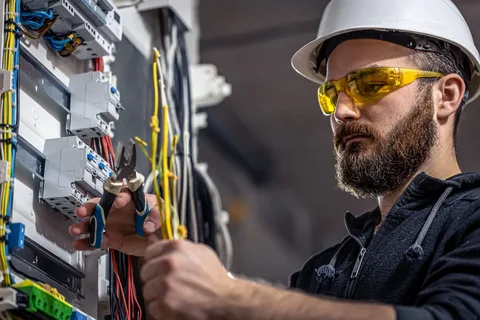
We know this housing stock. Mid-century homes around Conway lakes often have undersized services, aluminum wiring, ungrounded outlets, and older panels. This helps us diagnose issues faster.
We explain things clearly. You’ll understand what’s wrong, what we’re doing, and whywithout confusing jargon.
We’re available when it matters. We offer 24-hour response for genuine electrical emergencies and can help determine if your issue needs immediate attention.
We leave it clean. We protect your space, remove debris, and leave the work area tidy.
We cover Conway and the neighboring communities Belle Isle, Edgewood, Pine Castle, Sky Lake, Azalea Park, Rio Pinar and the surrounding southeast Orlando area, including the Hoffner Avenue and airport corridor. We also serve Kissimmee to the south and Winter Park to the north.
Residential and commercial, scheduled or emergency. If you’re unsure whether you’re in our area, call and ask.
Yes Conway and the surrounding southeast Orange County communities including Belle Isle, Edgewood, Pine Castle and Azalea Park, for both residential and commercial work.
Yes. Burning smells, sparking or scorched outlets, partial power loss, storm damage and panel faults are all same-day. If you're not sure whether your situation is urgent, call and describe it we'll tell you honestly.
Not usually all of it. The common findings in homes of that age here are an undersized service, aluminum branch circuits, ungrounded two-prong outlets, and sometimes a Federal Pacific or Zinsco panel. Each is addressed differently, and most are cheaper to fix than a full rewire. An inspection will tell you which apply to your house.
Both were widely installed in mid-century homes and both have documented histories of breakers failing to trip under fault conditions which removes the protection the panel exists to provide. Many inspectors and insurers flag them. If you have one, have it assessed.
Yes, particularly if anyone swims from it. Faulty dock wiring can energize the surrounding water, and current in fresh water passes through a swimmer's body the hazard is incapacitation and drowning rather than a visible shock. The NEC requires GFCI protection on dock circuits for this reason, and requirements have tightened over time, so older installations often fall short. It's a quick inspection.
More so here than almost anywhere. This region has the highest lightning strike density in the country, and most damage comes from nearby strikes and grid transients rather than direct hits. A panel-mounted device protects everything downstream, unlike a plug-in strip. Current NEC editions require it on new and replaced services.
Call (407) 358-0393 ,tell us what the system is doing and we'll advise whether it's urgent.

Local Electrician in Orlando providing fast, reliable electrical repairs, installations, upgrades, and emergency services for homes and businesses.